The Timeless Legacy of Punjabi Literature: 10 Best Punjabi Novels by Nanak Singh
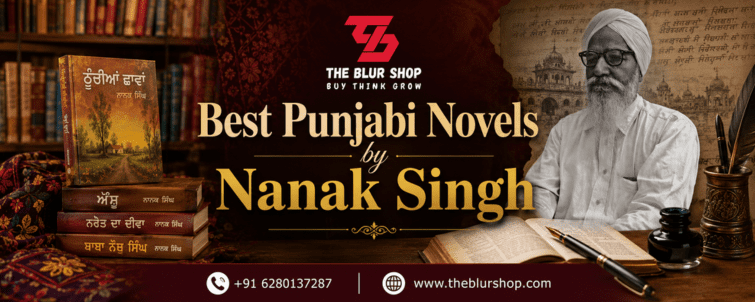
The landscape of Punjabi literature is vast, fertile, and deeply rooted in the soil of human emotion, social reform, and cultural identity. Among the Best Punjabi Novels by Nanak Singh, readers discover stories that beautifully capture the soul of Punjab, its traditions, struggles, spirituality, and evolving social consciousness. For decades, Punjabi literature has reflected the heartbeat of the Land of Five Rivers through unforgettable characters and emotionally rich storytelling. At The Blur Shop, we believe that books are not merely collections of pages; they are timeless companions that preserve culture, inspire thought, and connect generations.
When we talk about the evolution of the modern Punjabi novel, one name towers above all others: Nanak Singh. He did not merely write stories; rather, he revolutionized Punjabi prose by moving it beyond fantasy and folklore into the realities of social reform, human suffering, morality, and emotional truth. As a result, his novels became instruments of awareness, compassion, and change, making him one of the most celebrated literary figures in Indian literature.
Whether you are an avid reader looking to reconnect with your roots or a newcomer eager to explore classic South Asian literature, reading the best punjabi novels by nanak singh becomes an essential literary journey. In this comprehensive guide, we explore ten of his most remarkable masterpieces—books that continue to inspire readers across generations and that readers can easily discover through the thoughtfully curated literary collection at The Blur Shop.
Why Nanak Singh remains the Father of the Punjabi Novel
Before Nanak Singh began writing, Punjabi prose largely remained didactic, theological, or steeped in folklore. However, Nanak Singh transformed the trajectory of the language by introducing social realism. Instead of focusing on fantasy, he wrote about the poor, the marginalized, widows, victims of communal frenzy, and young dreamers crushed by archaic societal norms. Furthermore, his writing style remained simple yet elegant, accessible to the common reader while still carrying deep poetic beauty.
Most importantly, his characters never appear as perfect archetypes. Rather, they struggle like ordinary human beings searching for redemption, love, and dignity. Consequently, this universal humanism makes his novels timeless. Even decades after publication, his books continue to rank among the best punjabi novels by nanak singh because modern readers still relate to their themes and emotional truths.
To preserve this magnificent literary heritage, The Blur Shop proudly brings these classic works directly to readers, ensuring future generations continue to experience the brilliance of Punjabi literature.
1. Chitta Lahoo (White Blood)
Short Overview & Storyline
First published in 1932, Chitta Lahoo is widely considered the novel that established Nanak Singh as a premier literary force in Punjabi. The story revolves around the tragic life of Sundri, a young, pure-hearted girl who falls victim to the cruelties of an unforgiving, hypocritical society. Through the characters of Rodoo (a street performer with a golden heart) and Gurdevi, the novel exposes the moral decay of Punjabi middle-class society, where the “blood” of human compassion has turned “white” (cold and lifeless).
Literary Significance
Chitta Lahoo was a revolutionary milestone. It marked the definitive shift of Punjabi literature from historical romance to critical social realism. It challenged established religious and social hierarchies with an audacity that was unheard of at the time.
Themes & Emotions
- The decay of human empathy: The central metaphor of “white blood” represents the death of compassion.
- Marginalization and prejudice: The cruel treatment of orphans, women, and lower-caste individuals.
- Tragic love and redemption: The painful quest for dignity in a hostile environment.
Why Readers Should Read It
If you truly want to understand where modern Punjabi social fiction began, then this book remains indispensable. Not only does it deliver a gripping emotional narrative, but it also forces readers to question systemic injustices that continue to exist today. Therefore, it easily ranks among the very best punjabi novels by nanak singh.
Cultural & Historical Relevance
During the height of the British Raj and India’s social reform movements, Chitta Lahoo mirrored the burning desire of Punjabi intellectuals to eliminate superstitions, untouchability, and the oppression of women. Today, readers can still explore this legendary novel through high-quality editions available at The Blur Shop.
2. Fauladi Phul (The Steel Flower)
Short Overview & Storyline
Fauladi Phul is a beautiful, emotionally complex narrative that explores the paradox of human nature. The title itself—translating to “The Steel Flower”—symbolizes a character who possesses the tenderness of a flower but the unyielding strength of steel. The story focuses on the emotional conflicts of individuals caught between their personal desires and their moral duties, highlighting how love can both soften and fortify a human soul.
Literary Significance
Pavitar Papi stands as a masterclass in emotional storytelling and narrative tension. Furthermore, filmmakers later adapted the novel into a highly successful Bollywood movie in 1970, which expanded its popularity beyond Punjabi readers.
Themes & Emotions
- The duality of human nature: Balancing sensitivity with resilience.
- Sacrifice versus selfishness: The heavy cost of upholding moral principles.
- Emotional transformation: How adversity shapes character.
Why Readers Should Read It
Fauladi Phul is an excellent read for those who appreciate character-driven stories. It is less about high-octane plot twists and more about the quiet, beautiful, and sometimes painful evolution of the human spirit. It is a shining example of why Nanak Singh’s works are considered some of the best punjabi novels by nanak singh.
Cultural & Historical Relevance
The novel reflects the changing dynamics of the early-to-mid 20th century Punjabi family structure, where traditional values were beginning to clash with modern individualistic aspirations. At The Blur Shop, we highly recommend this book for readers who love psychological depth in literature.
3. Pavitar Papi (The Pure Sinner)
Short Overview & Storyline
Perhaps Nanak Singh’s most famous and beloved work, Pavitar Papi is a heartbreaking masterpiece about guilt, self-sacrifice, and redemption. The story follows Kidar Nath, an honest but impoverished young man who inadvertently deprives Panna Lal of his job, driving Panna Lal to disappear and leave his family in utter ruin. Consumed by immense guilt, Kidar Nath assumes the responsibility of secretly supporting Panna Lal’s family, eventually falling in love with Panna Lal’s daughter, Veena. To protect her honor and secure her future, he makes the ultimate sacrifice.
Literary Significance
Pavitar Papi stands as a masterclass in emotional storytelling and narrative tension. Furthermore, filmmakers later adapted the novel into a highly successful Bollywood movie in 1970, which expanded its popularity beyond Punjabi readers.
Themes & Emotions
- The burden of guilt: How a single mistake can alter multiple lives forever.
- Altruistic sacrifice: The concept of becoming a “pure sinner”—someone who commits minor wrongs (like deception) for a greater, noble good.
- Unrequited and tragic love: The painful boundary between duty and desire.
Why Readers Should Read It
This novel delivers an unforgettable emotional experience. In fact, it explores the burden of guilt and the depth of human sacrifice with extraordinary sensitivity. Therefore, if you plan to build a collection of the best punjabi novels by nanak singh, you should absolutely include Pavitar Papi in your library.
Cultural & Historical Relevance
Set against the backdrop of pre-partition urban Punjab, the novel paint a vivid picture of the economic hardships, the rigid societal expectations regarding marriage, and the deep sense of communal neighborhood support that characterized the era.
4. Ik Mian Do Talwaran (One Sheath, Two Swords)
Short Overview & Storyline
This historical masterpiece won the prestigious Sahitya Akademi Award in 1962. Ik Mian Do Talwaran is set during the fiery days of India’s struggle for independence, focusing specifically on the Ghadar Movement of 1915. The novel vividly portrays the life, passion, and ultimate sacrifice of the young revolutionary Kartar Singh Sarabha. The title “One Sheath, Two Swords” metaphorically refers to the impossibility of two opposing ideologies—violent revolution and peaceful negotiation—peacefully coexisting within the same freedom struggle.
Literary Significance
Through this masterpiece, Nanak Singh proved he could excel not only in social drama but also in historical fiction. In addition, he carefully researched the Ghadar Movement and transformed historical facts into an emotionally electrifying narrative.
Themes & Emotions
- Patriotism and revolutionary zeal: The burning desire for freedom from colonial rule.
- The tragedy of youth: Young lives cut short in the pursuit of a grand national dream.
- Ideological conflict: The clash between different methods of achieving liberation.
Why Readers Should Read It
If you enjoy patriotic literature or historical fiction, then this novel deserves a place on your reading list. Moreover, it introduces readers to Punjab’s revolutionary heroes while simultaneously exploring ideological conflicts within India’s freedom movement.
Cultural & Historical Relevance
The novel plays a crucial role in preserving the collective memory of Punjab’s radical revolutionary heritage. It serves as a reminder of the heavy price paid for independence. You can secure your copy of this award-winning classic today from The Blur Shop.
                                  LITERARY CORNER
               Explore the Best Punjabi Novels by Nanak Singh today!
            Whether you seek historical epics or heart-touching dramas,
               discover these timeless treasures at The Blur Shop.
5. Matrai Maa (The Stepmother)
Short Overview & Storyline
In Matrai Maa, Nanak Singh tackles a classic domestic trope—the stepmother—but strips away the fairy-tale caricatures to present a deeply nuanced, realistic psychological study. The novel explores the delicate relationships within a blended family, focusing on the emotional turbulence, misunderstandings, and ultimate realization of maternal love that goes beyond biological ties.
Literary Significance
Banjar feels remarkably modern because it connects environmental destruction with emotional and spiritual emptiness. Consequently, many literary scholars now consider it one of the earliest eco-critical works in Punjabi literature.
Themes & Emotions
- Family dynamics and jealousy: The friction between stepchildren and step-parents.
- The universality of motherhood: Defining maternal love through care and sacrifice rather than biology.
- Societal gossip and judgment: How external opinions can poison domestic peace.
Why Readers Should Read It
Today, discussions around climate change and agricultural crises dominate global conversations. Therefore, Banjar feels more relevant than ever before. Additionally, the novel offers readers a deeply emotional and poetic reflection on resilience, land, and humanity.
Cultural & Historical Relevance
Written at a time when joint families were the norm in Punjab, this book addressed the quiet, internal struggles of domestic life that were rarely spoken about openly. Bring this heartwarming tale into your home library through The Blur Shop.
6. Banjar (The Barren Land)
Short Overview & Storyline
Banjar is a powerful metaphorical novel that addresses both ecological and human desolation. The story is set in a rural Punjabi village where the land has turned barren due to neglect and changing economic conditions. Parallelly, the novel explores the “barrenness” of the human heart when it is stripped of love, empathy, and connection. Through the struggles of the local farmers and the protagonist’s personal emotional drought, Nanak Singh crafts a narrative of resilience and ecological consciousness.
Literary Significance
Banjar is remarkably ahead of its time. It connects environmental degradation with spiritual and emotional decay, making it a pioneering work in eco-criticism within Punjabi literature.
Themes & Emotions
- The connection between humans and earth: How healing the land can heal the soul.
- Economic exploitation: The plight of small-scale farmers against industrial greed.
- Hope and rejuvenation: The struggle to bring life back to a barren existence.
Why Readers Should Read It
With modern discussions heavily focused on climate change and agricultural crises, Banjar feels incredibly contemporary. It is a poetic, deeply moving story that highlights why Nanak Singh’s works are celebrated as some of the best punjabi novels by nanak singh.
Cultural & Historical Relevance
Agriculture is the very soul of Punjab. By writing about the land turning barren, Nanak Singh tapped into the deepest fears and realities of the Punjabi peasant class. You can find this profound ecological masterpiece in the literary catalog of The Blur Shop.
7. Astak Nastak (Theist and Atheist)
Short Overview & Storyline
Astak Nastak is a profound philosophical novel that explores the grand conflict between belief and skepticism. The narrative follows two primary characters: one a devout, orthodox believer, and the other a staunch, rationalist atheist. Through their intense debates, life experiences, and interactions with a deeply hypocritical religious establishment, Nanak Singh examines what it truly means to be spiritual and moral.
Literary Significance
Astak Nastak demonstrates Nanak Singh’s intellectual fearlessness. Instead of blindly glorifying religion, he openly questioned dogmatism, corruption, and hypocrisy. At the same time, however, he respected genuine spirituality rooted in compassion and humanity.
Themes & Emotions
- Blind faith versus rationalism: The intellectual search for truth.
- Religious hypocrisy: Exposing those who use God for personal gain.
- True spirituality: Finding divinity in the service of humanity rather than rituals.
Why Readers Should Read It
If philosophical novels and existential questions interest you, then Astak Nastak offers an unforgettable reading experience. Furthermore, the novel encourages readers to reflect deeply on morality, truth, and the meaning of faith itself.
Cultural & Historical Relevance
In a region historically shaped by intense religious movements and occasional communal friction, this novel advocated for a secular, humanist approach to life. Discover this philosophical gem at The Blur Shop and elevate your reading experience.
8. Khoon De Sohilay (Hymns of Blood)
Short Overview & Storyline
Written in the immediate aftermath of the Partition of India in 1947, Khoon De Sohilay is a hauntingly beautiful, agonizing account of the madness that gripped Punjab during that tragic division. The story is set in a peaceful village where Hindus, Sikhs, and Muslims had lived as brothers for generations. When the dark clouds of communal hatred arrive, the villagers are forced to choose between their long-standing human bonds and the rising tide of fanaticism.
Literary Significance
Along with its sequel, Agg Di Khed (The Game of Fire), this book stands as one of the most powerful, unbiased, and heartbreaking literary documentations of the Partition of Punjab. Nanak Singh writes with a bleeding heart, refusing to blame any single community, instead mourning the collective loss of humanity.
Themes & Emotions
- The tragedy of Partition: The sudden destruction of homes, lives, and ancestral bonds.
- Communal harmony versus political manipulation: The tragic breakdown of brotherhood.
- The resilience of love: Small acts of courage where neighbors risk their lives to save one another.
Why Readers Should Read It
To understand the historical trauma that still shapes the psyche of modern Punjab, reading Khoon De Sohilay is essential. It is a masterpiece of historical empathy and easily ranks among the absolutely best punjabi novels by nanak singh.
Cultural & Historical Relevance
This book is a vital historical document of 1947. It preserves the memory of a united Punjab and warns future generations against the dangers of communal hatred. Order this indispensable piece of history today from The Blur Shop.
9. Adh Khidya Phull (The Half-Blown Flower)
Short Overview & Storyline
Adh Khidya Phull is a deeply poignant romantic tragedy. The story revolves around young lovers whose aspirations and dreams are cut short by rigid social conventions, parental pride, and economic disparities. Like a flower that is plucked before it can fully bloom, the lives of the protagonists are withered by the harsh winds of societal expectations, leaving behind a fragrance of beautiful, lingering melancholy.
Literary Significance
In this novel, Nanak Singh masterfully captures the innocence, passion, and intense vulnerability of youth. His lyrical prose elevates a simple love story into a profound commentary on freedom, choice, and individual autonomy.
Themes & Emotions
- Unfulfilled potential: The tragedy of dreams left incomplete.
- Societal constraints on love: The clash between youthful desire and orthodox family pride.
- Grief and longing: The enduring pain of lost love.
Why Readers Should Read It
For readers who love classic romantic tragedies like Romeo and Juliet or Devdas, Adh Khidya Phull offers a uniquely Punjabi perspective on the theme. It is beautifully written, emotionally rich, and a staple of the best punjabi novels by nanak singh.
Cultural & Historical Relevance
The novel speaks directly to the generational gap and the struggle of young Punjabis to assert their right to choose their life partners in an era of strictly arranged marriages. Add this classic romance to your cart at The Blur Shop.
10. Patjhar De Panchhi (Birds of Autumn)
Short Overview & Storyline
Patjhar De Panchhi is a mature, reflective novel that focuses on the later stages of human life. The story centers around elderly characters who, like “birds of autumn,” find themselves isolated as the seasons of their lives change. The novel beautifully depicts their struggles with loneliness, their changing relationships with their adult children, and their search for peace and dignity in their twilight years.
Literary Significance
While most novels focus on the passion of youth, Nanak Singh turned his compassionate gaze toward the elderly in this work. It is a rare, highly empathetic exploration of aging, family neglect, and the beauty of quiet resilience.
Themes & Emotions
- Aging and isolation: The emotional challenges of growing old.
- Generational divide: The growing distance between aging parents and busy, modern children.
- The search for dignity: Finding self-worth when society begins to overlook you.
Why Readers Should Read It
This is a deeply moving, reflective book that will make you want to call your parents or grandparents immediately. It is a gentle reminder of the fleeting nature of time and the importance of familial love, making it a stellar addition to the list of the best punjabi novels by nanak singh.
Cultural & Historical Relevance
As Punjabi society began to transition from traditional joint families to nuclear ones mid-century, the elderly were often left vulnerable. This novel acted as a social mirror, urging families to cherish their elders. Discover this touching masterpiece at The Blur Shop.
The Master’s Themes: A Summary of Nanak Singh’s Literary Palette
To help you choose your next read, here is a quick overview of how these masterpiece novels compare in terms of their primary thematic focus:
| Novel Title | Primary Theme | Emotional Tone | Key Takeaway |
|---|---|---|---|
| Chitta Lahoo | Social Reform & Hypocrisy | Tragic & Raw | Compassion must never die in a civilized society. |
| Pavitar Papi | Guilt & Redemption | Heart-wrenching | True redemption comes through selfless sacrifice. |
| Ik Mian Do Talwaran | Revolutionary History | Patriotic & Intense | Freedom is bought with the blood of passionate youth. |
| Khoon De Sohilay | Partition & Harmony | Melancholic & Humanist | Communal hatred only destroys; humanity must prevail. |
| Patjhar De Panchhi | Aging & Family Dynamics | Reflective & Warm | Honor and care for those in the autumn of their lives. |
The Enduring Relevance of Punjabi Classics in the Digital Age
In today’s fast-paced digital world, where content is consumed in seconds-long videos, taking the time to read a classic novel is a revolutionary act of self-care. It allows us to slow down, build deep empathy, and connect with our ancestral roots. The best punjabi novels by nanak singh are not dusty museum pieces; they are living, breathing works of art that speak directly to our contemporary struggles with identity, morality, and social justice.
At The Blur Shop, we are incredibly passionate about making Punjabi literature accessible, appealing, and convenient to purchase for readers worldwide. We curate high-quality prints, translations, and hardbound editions of classic works so that you can experience the magic of Punjabi prose exactly as Nanak Singh intended. Reading these books is a way to keep our beautiful language alive in our homes and in our hearts.
Frequently Asked Questions (FAQs)
1. Why is Nanak Singh known as the “Father of the Punjabi Novel”?
Nanak Singh is called the “Father of the Punjabi Novel” because he pioneered the genre of social realism in Punjabi prose. Before him, Punjabi literature consisted mainly of religious tracts, historical romances, or folklore. He brought the language into the modern era by writing realistic, deeply emotional stories about contemporary social issues, poverty, women’s rights, and communal harmony.
2. Which of Nanak Singh’s novels won the Sahitya Akademi Award?
His historical masterpiece, Ik Mian Do Talwaran (One Sheath, Two Swords), won the prestigious Sahitya Akademi Award in 1962. The novel is highly celebrated for its detailed and patriotic depiction of the 1915 Ghadar Movement and the young revolutionary Kartar Singh Sarabha. It is widely considered one of the best punjabi novels by nanak singh and is highly recommended for all readers.
3. Are Nanak Singh’s books suitable for beginners in Punjabi reading?
Yes, absolutely! One of Nanak Singh’s greatest strengths was his simple, elegant, and highly accessible vocabulary. He wrote in the colloquial language of the common people of Punjab, making his novels highly readable. If you are a beginner looking to improve your Punjabi reading skills, classics like Pavitar Papi or Chitta Lahoo are excellent starting points. You can find copies of these beginner-friendly classics at The Blur Shop.
4. Was “Pavitar Papi” adapted into a movie?
Yes, Pavitar Papi was adapted into a very popular Hindi-language film of the same name in 1970. The movie starred Balraj Sahni, Tanuja, and Vijay Anand, and featured beautiful, memorable music. The film successfully captured the intense emotional guilt and self-sacrifice that made the book a national sensation.
5. Where can I buy authentic Punjabi literature books online?
You can buy authentic, high-quality prints of the best punjabi novels by nanak singh, along with a wide range of other Punjabi literary classics, right here at The Blur Shop. We pride ourselves on sourcing the best editions to ensure that your reading experience is visually and intellectually rewarding.
Conclusion: Bring the Magic of Punjab to Your Bookshelf
Nanak Singh’s literature is a priceless heritage that deserves to be celebrated, read, and passed down through generations. His stories of love, tragedy, patriotism, and social reform continue to define the cultural consciousness of Punjab. By diving into the best punjabi novels by nanak singh, you are not just reading books—you are embarking on a profound journey of empathy, history, and self-discovery.
Don’t let these timeless stories fade from memory. Head over to The Blur Shop today and explore our extensive collection of classic and contemporary Punjabi literature. Whether you are buying Pavitar Papi for yourself or gifting Ik Mian Do Talwaran to a loved one, The Blur Shop is your ultimate destination for all things literary. Reconnect with your roots, support Punjabi letters, and enrich your mind—one beautiful page at a time.